The Birth of Zeus: Myth, Mystery, and the Sacred Caves of Crete
Introduction
The story of the birth of Zeus is one of the most powerful and fascinating myths in ancient Greek mythology. It is a tale of fear, prophecy, deception, and ultimately, triumph—a story that not only explains the rise of the king of the gods but also reveals deep insights into ancient Greek beliefs about power, fate, and divine order.
Set against the rugged and mystical landscapes of Crete, this myth continues to captivate historians, travelers, and mythology enthusiasts alike. From sacred caves hidden in mountains to ancient rituals performed by devotees, the legend of Zeus’ birth is deeply intertwined with both nature and spirituality.
In this comprehensive guide, we’ll explore the full story of Zeus’ birth, its symbolism, the locations associated with it, and why it still matters today—both culturally and as a travel experience.
🧬 The Mythological Background: Cronus and the Fear of Prophecy
To understand the birth of Zeus, we must first look at the events that led to it.
Cronus, one of the Titans, ruled the universe after overthrowing his father Uranus. However, a prophecy haunted him: one of his own children would overthrow him, just as he had done to his father.
Terrified of losing power, Cronus made a shocking decision—he swallowed each of his children at birth.
His wife, Rhea, gave birth to several children:
Hestia
Demeter
Hera
Hades
Poseidon
Each one was devoured by Cronus immediately after birth.
This cycle of destruction continued—until Zeus.
The Secret Birth of Zeus
When Rhea became pregnant with Zeus, she could no longer bear the loss of her children. Determined to save her newborn, she devised a clever plan.
Instead of giving Cronus the baby, she wrapped a stone in swaddling clothes and presented it to him. Cronus, unaware of the deception, swallowed the stone whole.
Meanwhile, the real baby Zeus was secretly taken away to the island of Crete.
Why Crete?
Crete plays a central role in the myth of Zeus’ birth. In ancient times, the island was considered sacred, mysterious, and somewhat distant from mainland Greece—making it the perfect hiding place.
There are two main traditions regarding Zeus’ birthplace:
🏔️ 1. The Dikteon Cave (Lasithi Plateau)
🏔️ 2. The Ideon Cave (Mount Ida)
Both locations claim to be the true birthplace of Zeus, and both are important archaeological and mythological sites today.
The Sacred Caves of Zeus
Dikteon Cave (Psychro Cave)
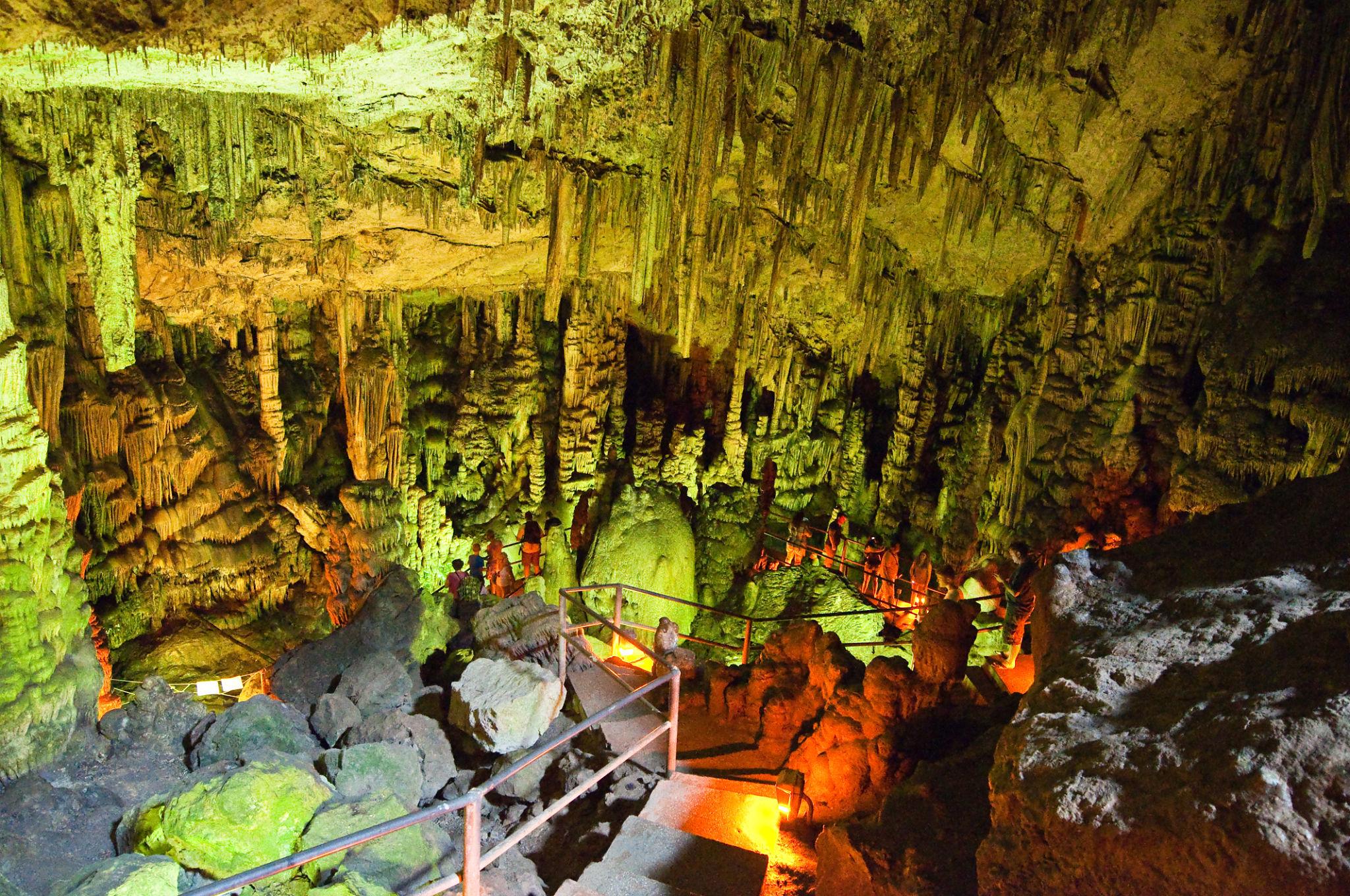
Located in eastern Crete, the Dikteon Cave is one of the most popular sites associated with Zeus’ birth.
Key features:
Impressive stalactites and stalagmites
A deep underground chamber
Archaeological finds linked to ancient worship
According to myth, this is where Rhea gave birth to Zeus in secret.
Ideon Cave (Mount Ida)
TheIdeon Cave, located on Mount Ida (Psiloritis), is another strong contender for Zeus’ birthplace.
Highlights:
Sacred to ancient worshippers of Zeus
Rich in archaeological artifacts
Connected with rituals and offerings
Some myths suggest Zeus was raised here rather than born here.
The Guardians of Zeus: Kouretes and Amalthea
Saving Zeus wasn’t enough—he had to be hidden and protected.
The Kouretes
A group of armored warriors known as the Kouretes guarded the infant Zeus. Whenever the baby cried, they:
Clashed their weapons
Danced loudly
Created noise to prevent Cronus from hearing him
Amalthea: The Divine Goat
Zeus was nourished by a magical goat named Amalthea.
According to myth:
She fed Zeus with her milk
One of her horns became the Cornucopia (Horn of Plenty)
The Rise of Zeus
As Zeus grew older, he became strong and wise. Eventually, he confronted Cronus.
With the help of the goddess Metis, Zeus tricked Cronus into vomiting up his swallowed children—who had remained alive inside him.
Together with his siblings, Zeus waged a great war against the Titans known as the Titanomachy.
After a long and brutal battle:
The Titans were defeated
Zeus became ruler of the gods
The Olympian order was established
Symbolism Behind the Myth
The birth of Zeus is more than just a story—it carries deep symbolic meaning.
Cycle of Power
The myth reflects a recurring theme:
Son overthrowing father
New order replacing old
Maternal Strength
Rhea represents:
Protection
Intelligence
Resistance against tyranny
Nature as Sanctuary
The caves of Crete symbolize:
Safety
Mystery
Connection between earth and divine
Archaeological Evidence and Ancient Worship
Both caves associated with Zeus have yielded significant archaeological findings:
Bronze figurines
Weapons
Offerings and votive objects
These discoveries suggest that:
Zeus was worshipped in Crete long before classical Greek mythology took its final form.
In fact, some scholars believe Zeus may have originally been a Minoan deity later incorporated into Greek mythology.
The Cultural Impact of Zeus’ Birth
The story of Zeus’ birth influenced:
Religion
Formation of Olympian hierarchy
Worship practices across Greece
Art & Literature
Ancient pottery
Sculptures
Epic poetry
Philosophy
Themes of justice, order, and fate
Visiting the Birthplace of Zeus Today
If you’re traveling to Crete, visiting the legendary birthplace of Zeus is an unforgettable experience.
Tips for Travelers:
Wear comfortable shoes (steep paths)
Visit early to avoid crowds
Combine with nearby villages and nature spots
Best routes:
Dikteon Cave → Lasithi Plateau
Ideon Cave → Psiloritis mountain routes
Variations of the Myth
Greek mythology is not a single fixed narrative—there are variations:
Some say Zeus was born in one cave and raised in another
Others place more emphasis on different guardians
Regional traditions influenced the story
This diversity reflects how myths evolved over time.
Why This Myth Still Matters Today
The birth of Zeus continues to resonate because it touches on universal themes:
Fear of losing power
The fight against oppression
The triumph of intelligence over brute force
It also connects deeply with:
Travel (mythological tourism)
Cultural identity (especially in Crete)
Storytelling traditions
Conclusion
The story of the birth of Zeus is not just a myth—it is a foundational narrative that shaped ancient Greek culture and continues to inspire the modern world.
From the dramatic deception of Cronus to the hidden caves of Crete, from divine protection to cosmic warfare, this story captures the essence of mythology: a blend of imagination, symbolism, and human truth.
Whether you are a history enthusiast, a mythology lover, or a traveler exploring Crete, the legend of Zeus offers a powerful journey into the origins of one of the most influential figures in Western culture.